
You’re sitting in traffic, you’re late for an important meeting, you’re looking for minutes left. Your hypothalamus, a small control tower in your brain, decides to send orders: Send stress hormones! These stress hormones are what trigger your body’s “fight or flight” response. Your heart beats, your breathing becomes faster and your muscles are ready for action. This response was designed to give you an immediate response to protect your body in an emergency. But when the response to stress increases day by day, it can seriously endanger your health. Stress is a natural physical and mental reaction to life experiences. Everyone expresses stress from time to time. From work and daily family responsibilities to serious life events, such as a new diagnosis, war, or the death of a loved one, stress can be overwhelming. For immediate, short-term situations, stress can be beneficial to your health. This can help you deal with potentially serious situations. Your body responds to stress by releasing hormones that increase your heart rate and respiration, and your muscles are ready to respond.

However, if your stress response does not stop firing and this stress level rises higher than necessary to survive, it can affect your health. Chronic stress can cause a variety of symptoms and affect your health. Symptoms of severe stress include:
Irritability
Anxiety
Depression
Headache
Insomnia Central nervous system and endocrine system
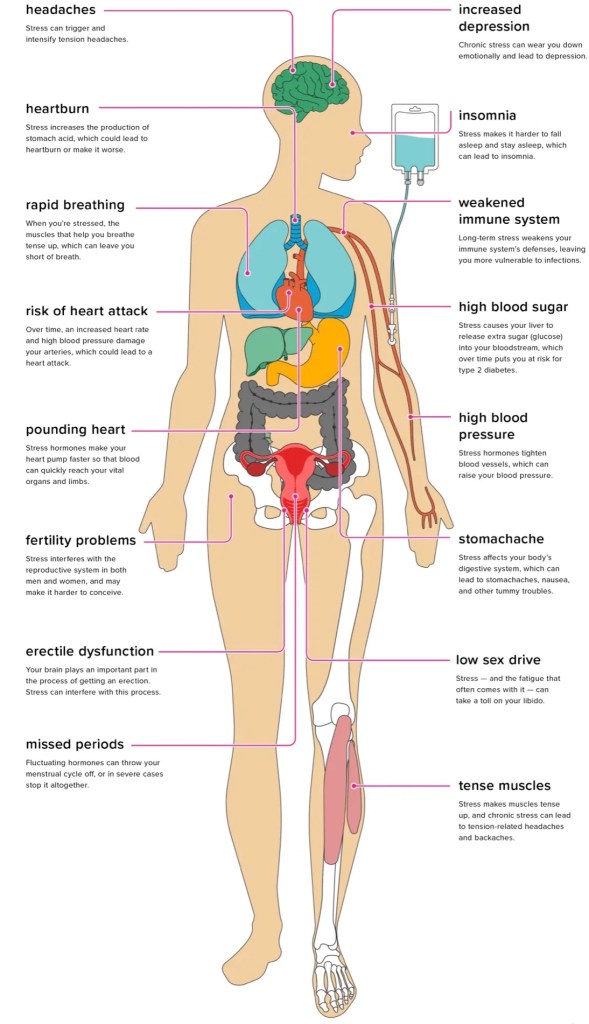
Your central nervous system (CNS) is responsible for your “fight or flight” response. In your brain, the hypothalamus rotates the ball, telling your adrenal glands to release the stress hormones adrenaline and cortisol. These hormones increase your heart rate and cause blood to flow to the areas where your muscles, heart and other vital organs are most needed in an emergency.
When the perceived fear is gone, the hypothalamus should tell all systems to return to normal. If the CNS does not return to normal, or the stress does not subside, the response will continue.
Stress is also a factor in behaviors such as overeating or not eating enough, alcohol or drug abuse, and social exclusion. Respiratory and cardiovascular systems

Stress hormones affect your respiratory and cardiovascular systems. During a stress response, you breathe faster in an effort to quickly deliver oxygen-rich blood to your body. If you already have a breathing problem like asthma or emphysema, stress can make breathing even more difficult.

Under stress, your heart also pumps faster. Stress hormones cause your blood vessels to constrict and divert more oxygen to your muscles, giving you more strength to take action. But it also raises your blood pressure.
As a result, frequent or prolonged stress will cause your heart to work very hard for many days. When your blood pressure rises, you run the risk of having a stroke or heart attack. Digestive system
Under stress, your liver makes extra blood sugar (glucose) to boost your energy. If you are under stress for a long time, your body will not be able to cope with this increase in excess glucose. Prolonged stress can increase your risk of developing type 2 diabetes.
Hormonal rush, rapid breathing and increased heart rate can also upset your digestive system. An increase in stomach acid can lead to heartburn or acid reflux. Stress does not cause ulcers (usually caused by a bacterium called H. pylori), but it can increase your risk and increase existing ulcers.

Stress can also affect the movement of food in your body, which can lead to diarrhea or constipation. You may experience nausea, vomiting or abdominal pain.
Muscle system
When you are stressed, your muscles stretch to protect yourself from injury. They come out again when you relax, but if you are under constant stress, your muscles will not get a chance to relax. Tight muscles cause headaches, back and shoulder pain, and body aches. Over time, this can start an unhealthy cycle as you stop exercising and turn to painkillers for relief. Sexuality and the reproductive system
Stress is exhausting for both body and mind. It is not uncommon to lose your will when you are under constant stress. Short-term stress can cause men to produce more of the male hormone testosterone, but this effect does not last.
If the stress continues for a long time, the testosterone level of the man may decrease. It can interfere with sperm production and lead to erectile dysfunction or impotence. Chronic stress can also increase the risk of infection of the male reproductive organs, such as the prostate and testicles.

For women, stress can affect the menstrual cycle. This can lead to irregular, heavy or more painful periods. Acute stress can also exacerbate the physical symptoms of menopause. Immune system
Stress stimulates the immune system, which can be a plus for emergencies. This stimulant can help you prevent infection and heal wounds. But over time, stress hormones weaken your immune system and reduce your body’s response to foreign invaders. People with severe stress are more susceptible to flu and the common cold, as well as other infectious diseases. Stress can also increase the time it takes for you to recover from an illness or injury.

Meticore burn fat don’t stopped eat pizza burger and other food enjoy it
More details click the link
https://www.digistore24.com/redir/348520/Nitinnar3/
His Secret Obsession – Insane Conversions and 90%
For the more details in the link
Love and relationship
Link:
https://docs.google.com/document/d/1AX69Rm3AaKiYJtF9XoiHeiu_bPxhJApsxltRzXU_XeQ/edit
Youtube link:-
https://youtube.com/channel/UC_XMK6BqLCtURL9GGS20dqw
Amazon associate web site publish
https://sites.google.com/view/best-dealshop-products/home
Godaddysites.com
https://ni3onlineproducts.godaddysites.com/
Wix Owner website for
https://nitinnar3.wixsite.com/nitinnar
WordPress.com
https://nitinnarfitness.wordpress.com
Blogspot.com
Facebook: nitin nar
Insta: nitin.nar3
LinkedIn: nitin nar
Twitter: @Nar3Nitin
 Healthfitly